Beaches. Webcams. History.

Beautiful Treasure Coast Live Beachcams
Enjoy the view!
See what’s happening in and around St. Lucie, Martin, and Indian River County 24/7.
- Fort Pierce Jetty Cam
- Fort Pierce Beach Cam
- Fort Pierce Inlet Cam
- Fort Pierce Surf Cam
- Boardwalk at The Port Cam
- Fort Pierce Marina Cam
- Jensen Beach Webcam
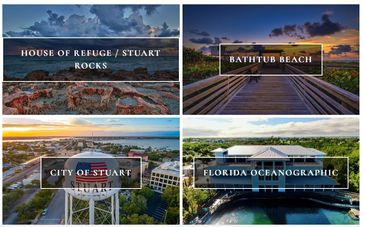
- House of Refuge stuart rocks surf report & surf cam
- Bathtub Beach
- City of Stuart
- Hobe Sound
- Florida Oceanographi

St Lucie County Beaches
Here's a complete beach list of beaches in Fort Pierce and St. Lucie County on the Treasure Coast.
Click on the Saint Lucie County beach name for the park description, phone number, location, directions, and amenities.
Blind Creek Beachside North and South) • Blue Heron Beach • Dollman Park Beachside • Frederick Douglass Memorial Park • Herman's Bay Beach • John Brooks Park Beachside • Middle Cove Beach • Normandy Beach • Ocean Bay Beachside • Pepper Park Beachside • Walton Rocks Beach / Dog Park • Waveland Beach
Live Webcams of Martin County and The Beaches
See what’s happening in and around Martin County with live webcams of Jensen Beach, Stuart, Hobe Sound Beach, and other places around town.

Santa Lucia - Mosquito County - St. Lucie
According to the St. Lucie County website, historians believed that the name "St. Lucie" was first given to this area by the Spanish. The name was given on December 13, the feast day of Saint Lucia.
The "Santa Lucia" colony was established between Vero Beach and Stuart around 1567, as shown on old Spanish maps that identified the area as Santa Lucia, what is now known as Vero Beach to Stuart, or the Treasure Coast.
The Saint Lucie Historical Society, tells us that what is now Saint Lucie County was known as East Florida in 1810. In 1821 the area was renamed St. Johns County. St. Johns was split into several counties in 1840.
That's when this area became Mosquito County.

A Florida River, Its Wildlife: A Look at St. Lucie River (circa 1950)
History buffs, this is worth a watch!
From the
STATE LIBRARY AND ARCHIVES OF FLORIDA
https://youtu.be/AkI041Q7pIg?si=4lAmreai-zvVCPr1
This film shows a trip down the Saint Lucie River, on the Treasure Coast, with E.W. Dutton. Viewers see gators, blue herons, and many plants and flowers. The film also shows a red-shoulder hawk, sand hill crane, armadillo, black bear and cub, rattlesnake, land crab, and a gator being fed by hand. Viewers see pelicans, mullet, cormorant, deer and a Florida panther. The film series is incomplete.
To see full-length versions of this and other videos from the State Archives of Florida, visit https://www.floridamemory.com/video/ Repository: State Library and Archives of Florida, 500 S. Bronough St., Tallahassee, FL

Explore and Discover the Savannas Preserve State Park
Located on Florida's southeast coast, the park's scenic landscapes represent what the first pioneers would have seen in the area.
Drum Circle Events Gift Shop GUIDED HIKES Membership Native Plants
Savannas Preserve State Park protects a representative sample of a basin marsh that extended throughout South Florida prior to rapid suburban growth.
Pavilions and picnic tables are available near the center and at trail heads throughout the park. Canoeing, kayaking and fishing in the wetlands are popular recreational activities.
Wildlife enthusiasts and photographers will enjoy the diversity of habitats this undisturbed area has to offer. The park boasts over 17 miles of multi-use trails that provide ample opportunities for hiking, bicycling and horseback riding.
Regularly scheduled guided walks and canoe trips are available by reservation.
Check out these beautiful drone videos by Alan Nyiri!
https://youtu.be/WHbGEio2ZM0?si=gSqq2voL4a_Oqgow
Location & Hours
Friends of Savannas
2541 Southeast Walton Road
Port St. Lucie, FL 34952, US
(772) 398-2779
friendsofsavannas@gmail.com

Community Resources
Local Charitable Community Organizations
DIAL 211 FOR INFORMATION AND REFERRALS TO SOCIAL SERVICES AND OTHER ASSISTANCE
211.ORG
- Angels of Hope Outreach – Homeless Ministry – Rehabilitation and Love
- Boys & Girls Clubs of St. Lucie County
- CareBag
- DoYouGiveARuck
- Family Meals (familymealsinc.org)
- Florida KidCare | Offering health insurance for children from birth through age 18
- Grace Family Church Food Pantry
- House of Hope
- Treasure Coast Blue Star Mothers -
.jpg/:/cr=t:0%25,l:8.62%25,w:82.76%25,h:100%25/rs=w:365,h:182.5,cg:true)
History of the Land at Savannas Preserve
The history of Savannas Preserve State Park, along with the surrounding areas in Saint Lucie, Fort Pierce, and Port St. Lucie Treasure Coast, largely revolved around the Pineapple Farming Industry.
In 1881, Captain Thomas Richards was credited with planting the first pineapple slips in the area. Soon after, he established a pineapple plantation and an estate along the high bank located along the west Indian River Shore.

HISTORY OF FORT PIERCE
On the Treasure Coast -
Reposted from Florida Backroads Travel
The official slogan is the "Sunrise City", sister city to the "Sunset City", San Francisco.
Fort Pierce, like many other Florida places, traces its name back to the Seminole Wars. A fort was built at this location between 1838 and 1842 and named for Lieutenant Colonel Benjamin K. Pierce who commanded troops at the fort.
Pierce happened to be the brother of Franklin Pierce, who was the President of the United States from 1853 to 1857.
Settlers began to arrive in the area in the 1860s, and founded a small fishing village named Edgartown that had an oyster cannery.
The village was included in an incorporation that established the City of Fort Pierce in 1901.
Fishing and pineapple growing were the most important economic drivers in the early years of the city, and it also served the cattle ranches in the prairies west of the city.

7 Best Things to Do in Fort Pierce
Fort Pierce, is renowned for its stunning beaches, exciting local events, vibrant downtown district, and many other community attractions. According to Authentic Florida, there are numerous must-see sights in Fort Pierce, including picturesque gardens, fascinating museums, scenic parks, and charming cafes.

Say no to the "Hurricane Cut"
Palm trees were designed to bend and sway with the wind.
While some may choose to perform the dreaded "hurricane cut" to lighten the tree's load, excessive pruning can harm the tree's health and increase its susceptibility to wind damage. This technique can strip the palm of essential nutrients, especially potassium, which is crucial for growth and greenery. Pruning too much can cause fronds to turn brown, eventually leading to withering and death. Treasure Coast, just say no to the hurricane cut.
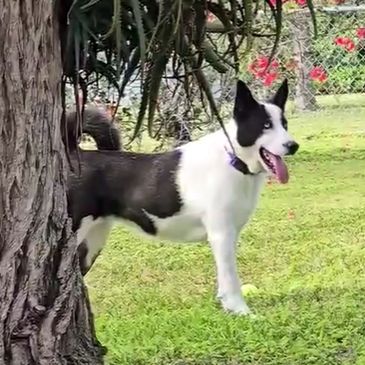
Dogs, Cats, and Cane Toads. Keeping Your Pets Safe.
Breeding Season is March to September
Treasure Coast residents, from March to September; eggs are laid in long strings, virtually indistinguishable from eggs of native "true" toads.
Cane Toads can lay up to 30,000 eggs twice a season —in long strings in fresh water. Both eggs and tadpoles are also poison. It’s easy to identify toad eggs; they are the only ones laid in long clear strands like spaghetti. The eggs look like a row of little black dots. Destroy the cane toad eggs by taking them out of the water and leaving them to dry. Cane toad eggs also contain bufotoxin and can harm or kill native animals that consume them.
Generally speaking, the adult cane toad has enough toxin to kill an average-sized dog in 15 minutes. The smaller the dog, or cat, the more seriously affected they will be. If your dog does come into contact with the toxin, early intervention is crucial for recovery. (more on this below)